Letting the Grass Grow · Long-Term Investing
Investing should be like watching grass grow or watching paint dry. If you want excitement, take $800 and go to Las Vegas. Paul Samuelson
Written by a Dutch finance lawyer with more than twenty years in banking. No tips, no hypes: a philosophy built to last for decades.
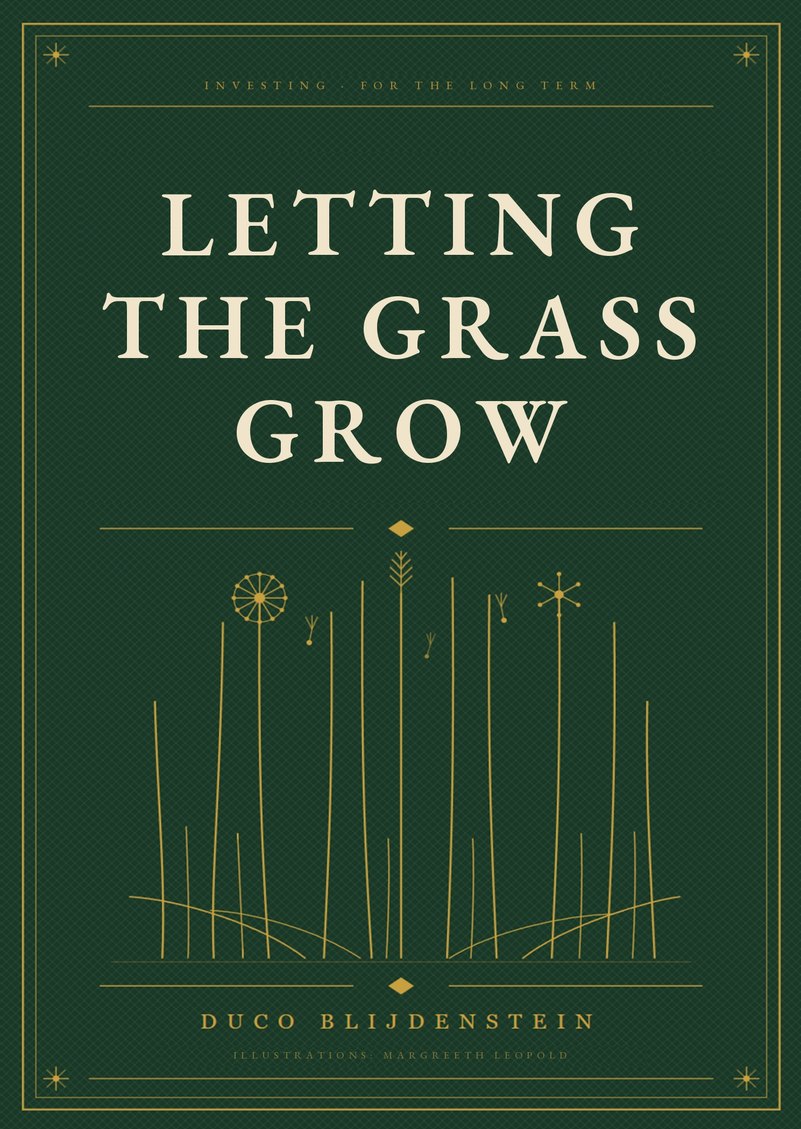
Letting the Grass Grow is a book on value investing in the tradition of Benjamin Graham, Philip Fisher, Warren Buffett, and Charlie Munger. It was written for the serious private investor who is not looking for tips, but for a philosophy that holds up for decades.
The book grew out of a presentation Duco Blijdenstein put together for a family member who wanted to start investing. What began as a personal answer to the question “what should I look out for?” grew into sixteen chapters — from the history of value investing to reading financial statements, from calculating intrinsic value to the psychology of the market and of yourself.
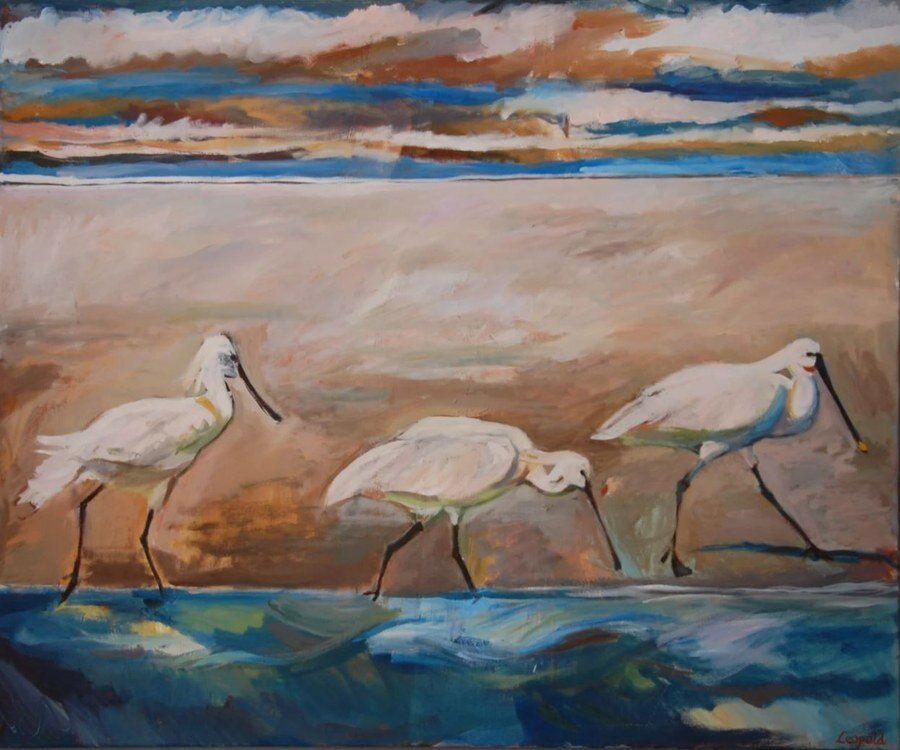
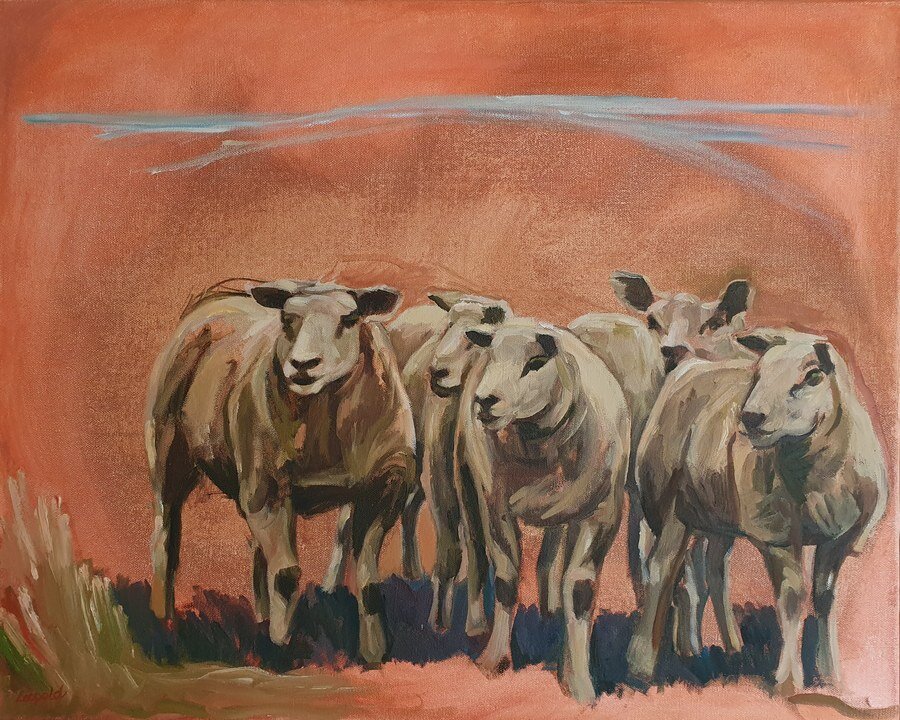
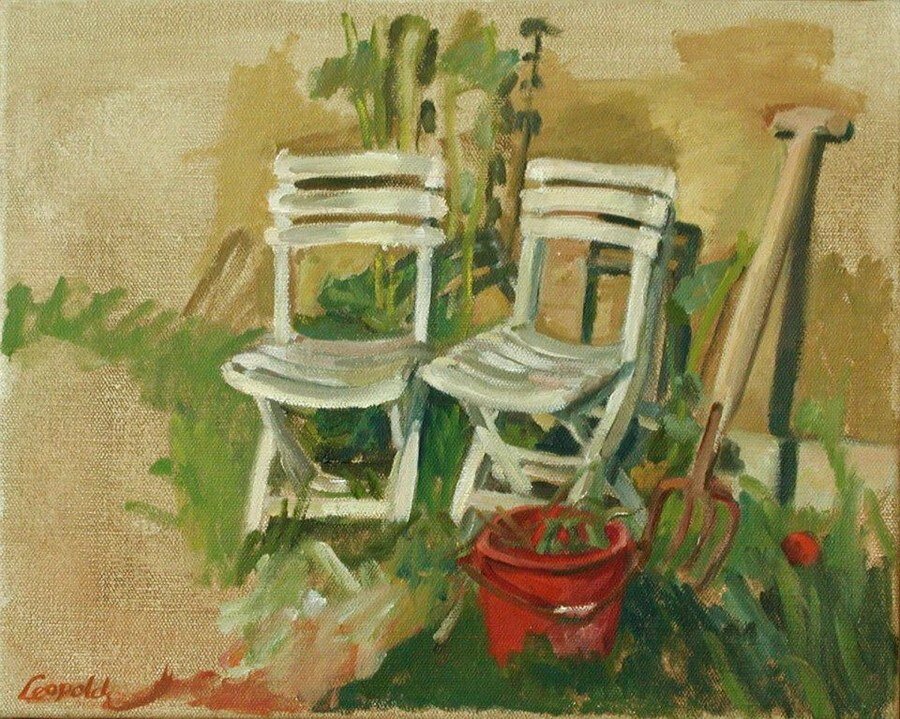
The style is clear, direct, and accessible, without needless jargon. Footnotes follow academic conventions. The illustrations are paintings by the author’s mother, artist Margreeth Leopold — something that sets this book apart from every other title in the genre.
Eight of the sixteen chapters, from your first stock to a portfolio that lasts for decades.
The difference between ownership and gambling — and why time turns the first into an ally and the second into an enemy.
From Graham and Fisher to Buffett and Munger — why their way of thinking still explains today’s markets.
Mr. Market as your servant, not your teacher — and why fundamentals change far more slowly than prices suggest.
How to recognize a company that can keep it up for twenty years — and how deep the moat really is.
Owner earnings, predictability, and the ‘too hard’ pile — no Excel swamp, just thinking discipline.
What artificial intelligence can and cannot do for you — and why confirmation bias is the greatest danger.
Concentrated, not randomly diversified. Positions sized on conviction, and risk defined in a way that matters.
The five classic mistakes and the antidote: process over outcome, patience over action.
You are not buying price tickets. You are buying pieces of real businesses, run by real people, selling real products or services to real customers. From the foreword
A few years ago my cousin called me with a question I have heard many times since: “I want to start investing. What should I look out for?” He had some savings, a long time horizon ahead of him, and the good instinct that saving alone would not be enough to grow his wealth. But he did not know where to begin.
I sat down at my desk and put together a presentation. Not as investment advice, but as a travelogue: this is the road I walk myself, these are the lessons I have learned along the way, and these are the thinkers on whose shoulders I stand.
Investing is not difficult. But it demands something many people find harder than calculations or spreadsheets: patience, discipline, and the ability to keep your own emotions in check.
This book is written for the investor who wants to get serious. Not the investor who wants to get rich quick — that one will be disappointed here. But the investor who understands that the real reward goes to those who work patiently, consistently, and methodically. Someone who is willing to learn.
An excellent introduction to the philosophy of value investing. The key concepts are explained very clearly and are a pleasure to read. The investment philosophy described in this book is, as far as I am concerned, an absolute must for every serious investor. Hendrik Oude NijhuisFund manager, ValueMachinesFund (Netherlands), on the Dutch edition
Duco Blijdenstein is a banking finance lawyer and value investor. He is the founder of Blijdenstein Legal, a firm specializing in banking finance. He was previously Head of Legal at a European bank, an attorney at Norton Rose Fulbright and a co-founder of Bond Advocaten. He is also a member of the investment committee of the Koninklijke Industrieele Groote Club (IGC) in Amsterdam.
Investing runs in the family. The Blijdenstein name is inextricably linked to De Twentsche Bank, one of the predecessors of ABN AMRO, which his ancestor Benjamin Willem Blijdenstein helped found. That background made him aware early on of what patient capital can do.
With more than twenty years of experience in the Dutch and international financial markets, he combines three perspectives that rarely meet: the lawyer who knows the structure of finance, the practicing value investor, and the author who makes that knowledge accessible to a wider audience.
The book is illustrated with paintings by Margreeth Leopold, professional artist and mother of the author. Her work gives the book something investment books rarely have: beauty.
Want to see more work, buy a painting, or commission a portrait?
Browse the full oeuvre at margreethleopold.nl.
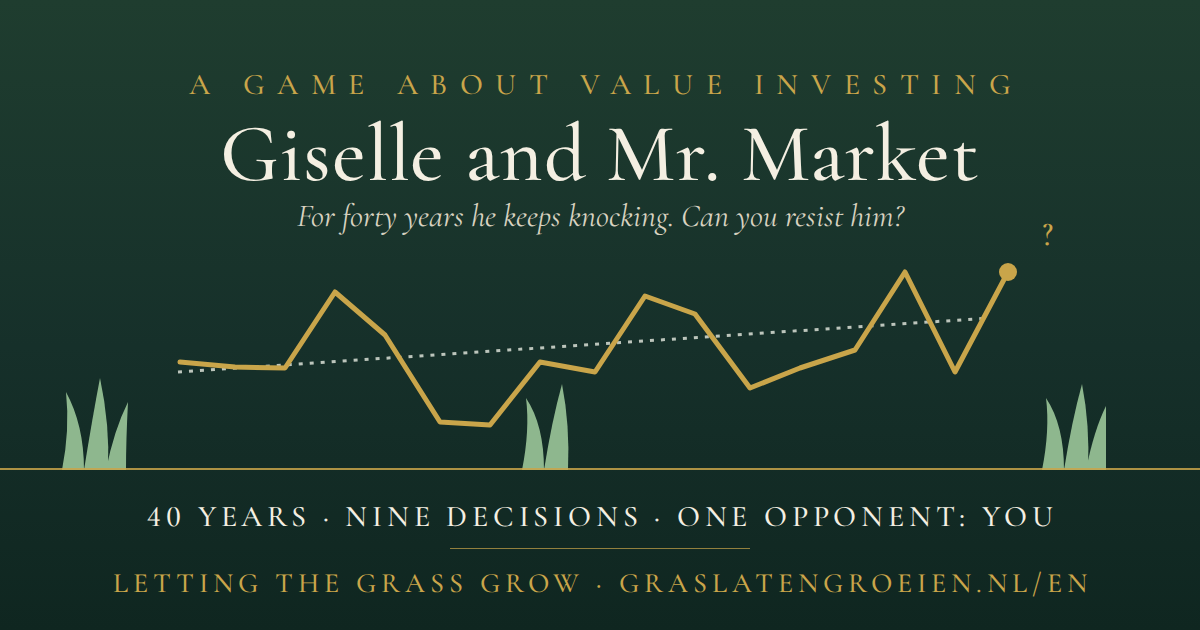
Guide Giselle through forty years, from eleven-year-old saver to wealthy fifty-something. Nine decisions, a napkin with the numbers, two crashes, a hype, and a charismatic CEO. In the end, what counts is not what the market thinks, but what her holdings are really worth. And above all: your wisdom.
Free, five to ten minutes, works on your phone
Run a company through the checklist from the book, point by point: the quick sieve of fifteen questions, the full checklist of 44 points, the sell decision and your own thesis with margin of safety. Includes a ready-made prompt to have an AI model read along critically (chapter 12).
Free, no account needed. Your analyses stay in your own browser.
Leave your email address to hear about the English edition, new essays, and the occasional insight from Letting the Grass Grow. No spam; unsubscribe anytime.
Straight to your inbox · a few times a year at most
The English edition is available as a Kindle e-book and as a paperback, printed and shipped by Amazon in your region. Prefer the original? The Dutch printed edition ships from the author’s own stock.
Sold through Amazon · Dutch edition at graslatengroeien.nl